The Clarinet BBoard The Clarinet BBoard
|
Author: Chris P
Date: 2025-12-03 03:49
Attachment: P1010005.JPG (679k)
Attachment: P1010004.JPG (680k)
Attachment: P1010003.JPG (674k)
Attachment: P1010002.JPG (692k)
Attachment: P1010001.JPG (682k)
There's no reason why you should have to be limited by the instrument you're playing if it's causing you physical pain, so instead of putting up with it, have the necessary adaptations you need to have done to it to make things easier for you.
If that's a simple case of adjusting touchpieces by bending them to fit your hands for easier reach, then have that done. If you need to build up touchpieces, then have that done. If you have to get significant keywork alterations done, then have that done.
Some people will scoff at the idea of having anything done and tell you to practice more or 'man up' when in reality, certain mobility problems are beyond practice or 'manning up'. If you need to use an RDG BHOB for support, then use that if that relieves the pain in your right thumb, hand, wrist, forearm, elbow or shoulder.
If you have restricted mobility or physical pain in your fingers, hands, wrists, etc. then have the alterations and adaptations made to the instrument to allow you to play without causing any undue pain.
Recently I've been getting a sharp pain in the base of my left thumb when playing upper register C#/Db with the LH pinky or using the LH Ab/Eb lever as my left thumb is becoming arthritic and my LH pinky is starting to curve inwards which is causing pain when stretching to reach those LH levers. As a result, I'm rocking my left thumb upwards and leaking off the thumb tube.
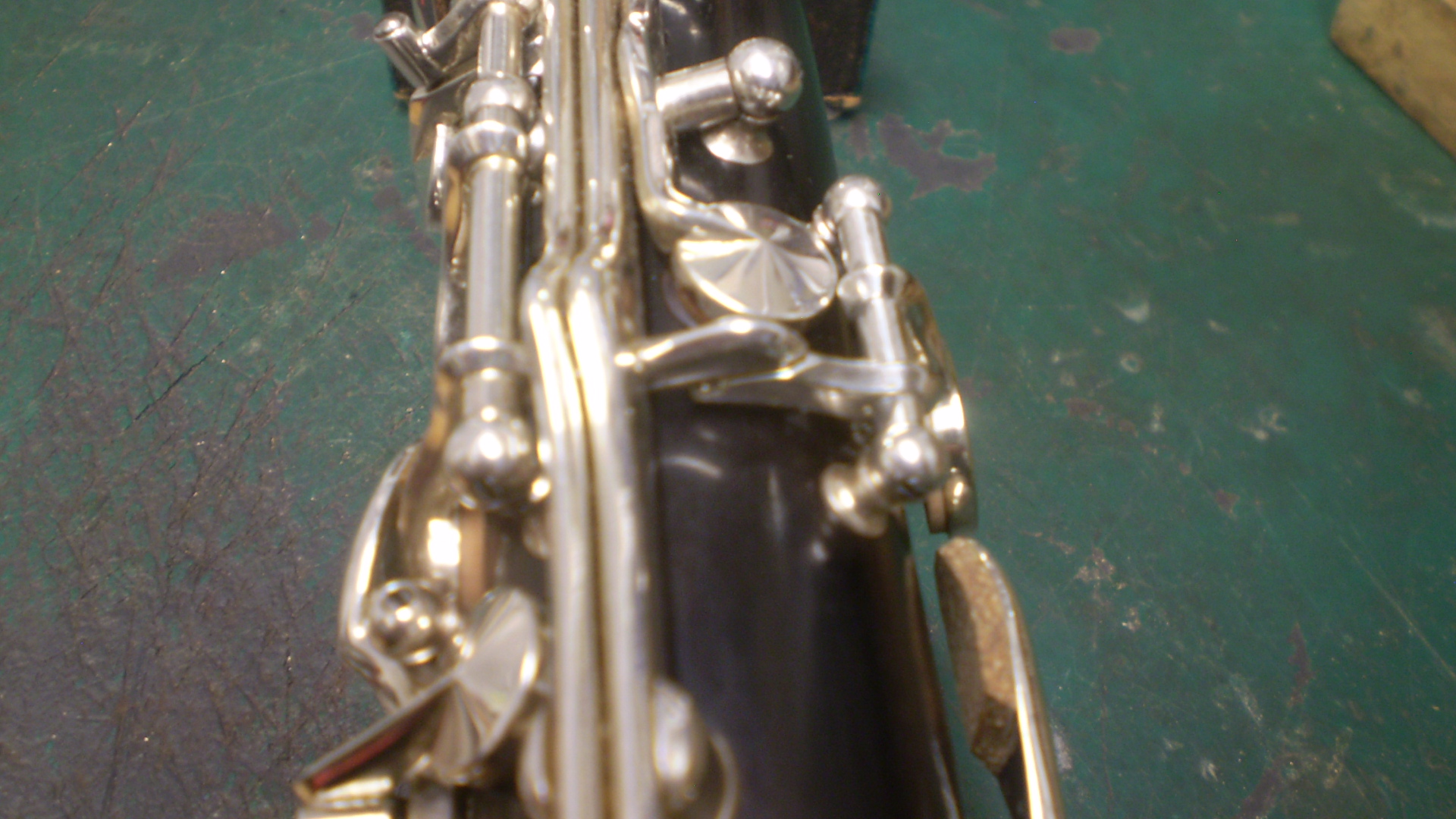
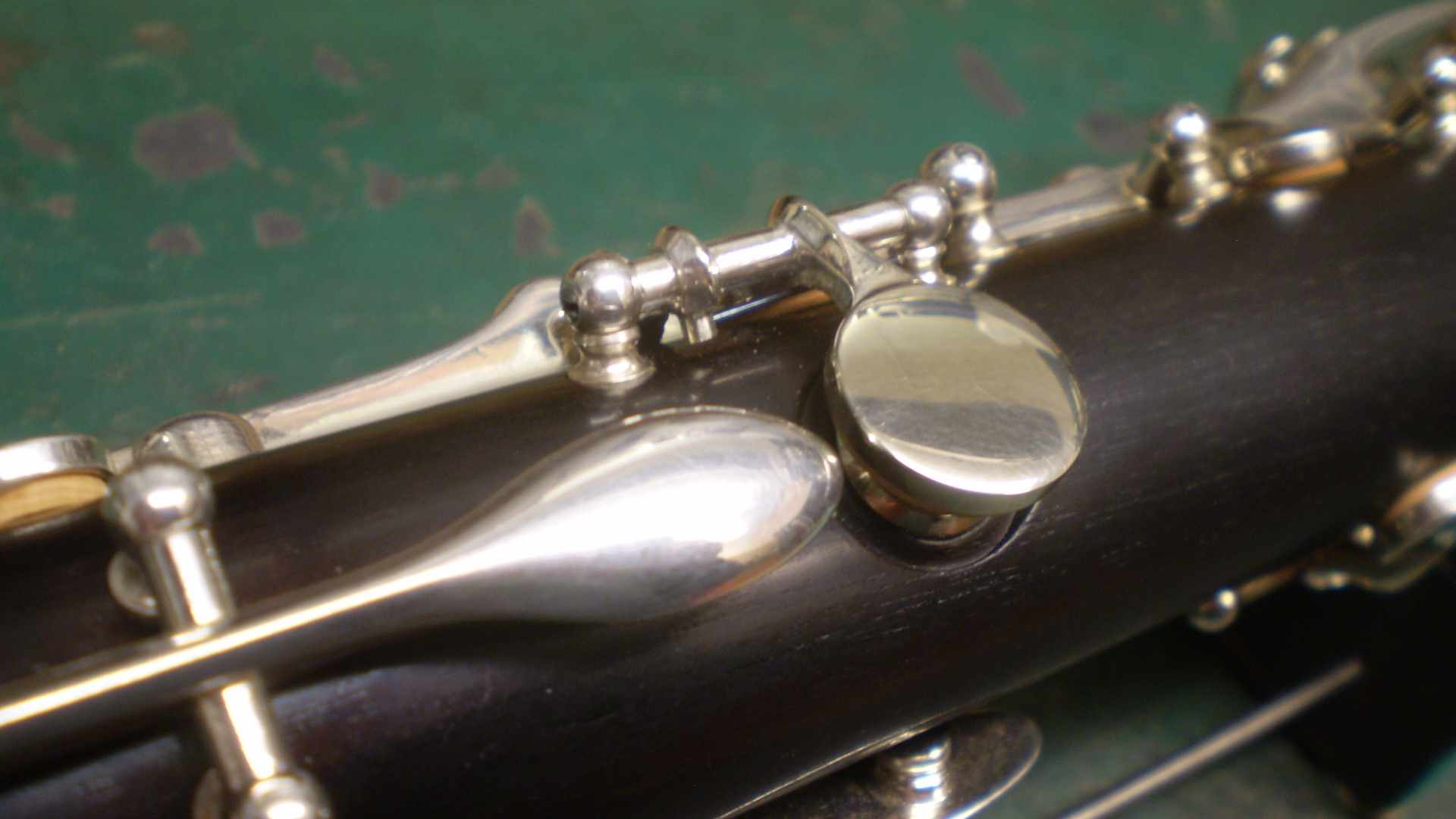
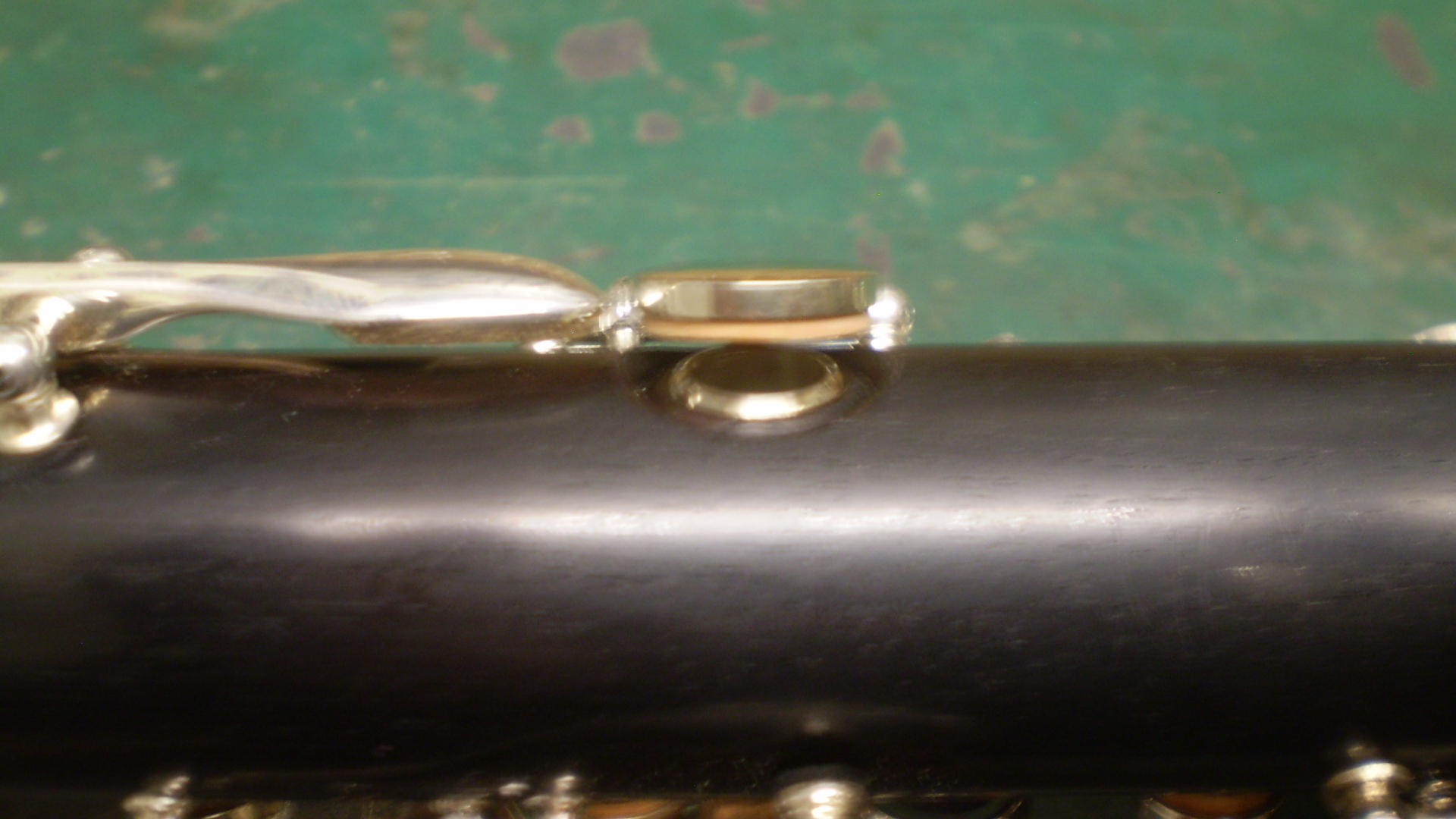
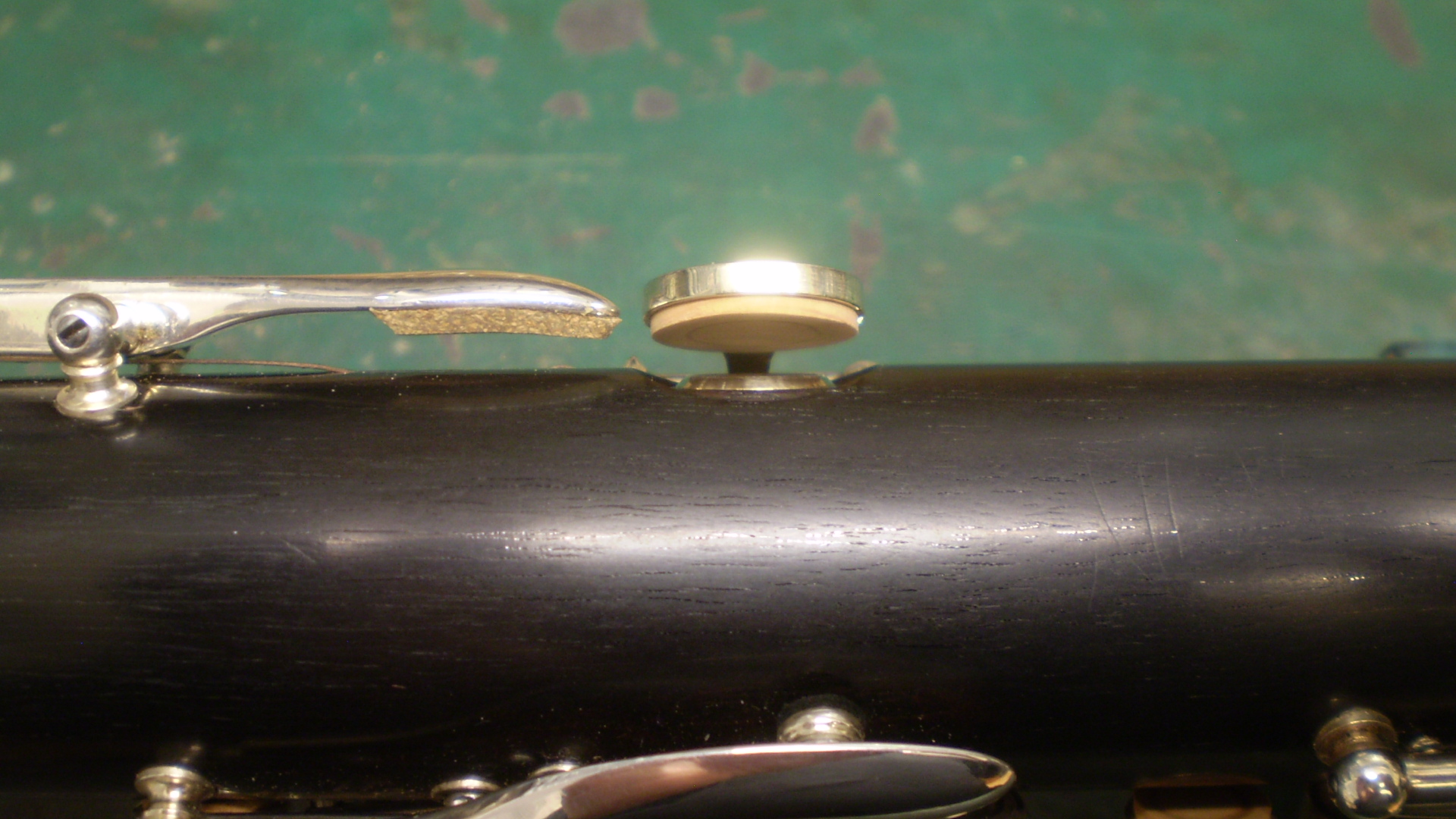
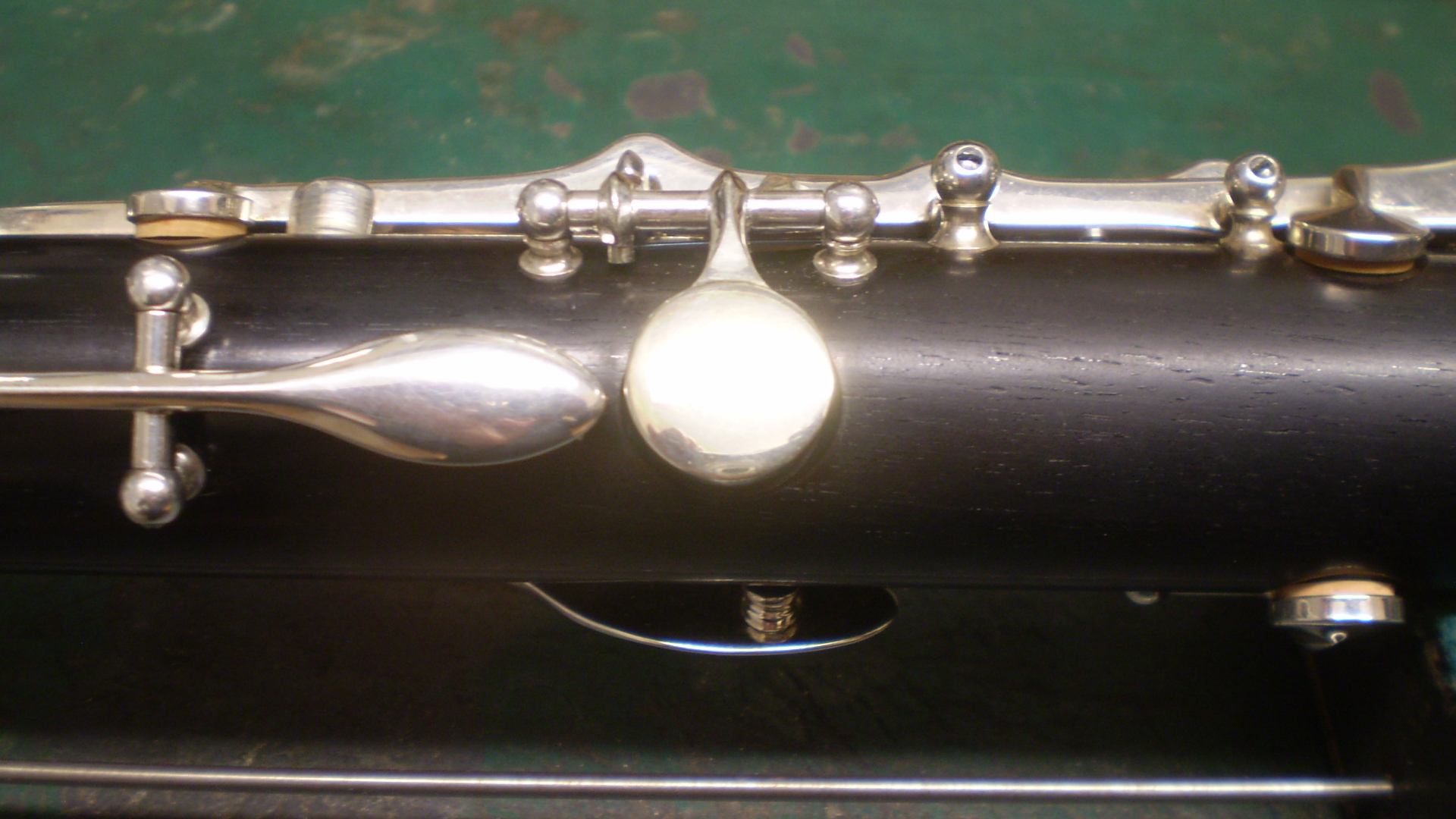
I had enough of that and converted the LH thumb ring on my 1958 Selmer CT full Boehm into a thumbplate, using a large oboe/cor anglais pad cup which was just the right diameter for the job (15.5mm outer diameter/14mm inside diameter). The thumb tube was shortened and turned into a bedplace with a bevelled edge for the thumbplate pad to seat against and that hasn't caused any tuning problems with the lower register F# (LH1 only).
I used parts from a scrap Q series CT top joint to do these alterations so the original keywork and thumb tube can be refitted at any point in time and no alterations have been made to the clarinet itself, besides adding a No.10/0.5mm needle spring to the new thumbplate in the lower thumb ring pillar (like a B&H 1010 has).
I've just done a rehearsal this evening and now I can rock onto the speaker touch with no risk of leaking off the thumb tube when going for an upper register LH C#/Db or LH D#/Eb, nor having to contort my left thumb in such a way to both fully cover the thumb hole and hold down the speaker key.
No other woodwinds I play have thumb holes - they either have thumbplates (oboe, cor and d'amore) or thumb keys (flutes, piccolo and contrabassoon) or just a thumb button and an 8ve key (saxes), so having a thumbplate added to my clarinet (just the one currently) doesn't feel odd at all - they're standard fit on most modern basset horns as well as alto and bass clarinets, so no reason why they can't be fitted to any soprano clarinet.
There were some Bundy and Vito clarinets fitted with thumbplates with ring keys elsewhere, or even had fingerplates for LH3 and RH3 to help players with small hands or with mobility problems. Rosario Mazzeo even had thumbplates fitted to his own clarinets as well as thumbplates being fitted to Mazzeo systems.
I can't honestly see any reason why clarinets need a thumb ring except for the fact it's probably less costly to make and provided the thumbplate venting is sufficient (a shorter underlever will do the trick), the F# (with just LH1) won't be stuffy.
Attached are photos of the thumbplate I knocked up the other day - it'll still need to be silver plated, but tonight's rehearsal showed exactly the benefits of having such a relatively simple adaptation done.
Feel free to comment and expect a fight if you decide to challenge me on any half-baked and preconceived reasons why I shouldn't have done it. Everything is done for a reason and I have my own perfectly valid reasons to do this adaptation.
Former oboe finisher
Howarth of London
1998 - 2010
Independent Woodwind Repairer
Single and Double Reed Specialist
Oboes, Clarinets and Saxes
NOT A MEMBER OF N.A.M.I.R.
The opinions I express are my own.
Post Edited (2025-12-05 19:55)
|
|
Reply To Message
|
|
Author: Erez Katz
Date: 2025-12-03 05:26
Reasons why you shouldn't have done it? more like why haven't you don't it earlier?
I like the idea a lot. The instrument is a tool that needs to serve the player - not the other way around.
|
|
Reply To Message
|
|
Author: m1964
Date: 2025-12-03 07:09
Chris,
Great work! (as any other work you demonstrated here!)
Unfortunately, when getting older, arthritis kicks in and sometimes not much can be done by stretching or surgically.
Good thing is that plateau clarinets are available either used (occasionally) or new. I have not seen any plateau clarinets in A but I am sure a regular A can be converted into a plateau.
|
|
Reply To Message
|
|
Author: Chris P
Date: 2025-12-03 20:53
I don't know why I didn't do this earlier either, but it shows these things are always an option as are all other keywork mods which will make playing easier and allow players to play for much longer instead of having to give up due to injury or the onset of arthritis. I think both Selmer and most likely Leblanc offered full plateaux model full Boehms in both Bb and A - possibly in C and Eb as well.
I've got a set of Louis Rossis in for some keywork surgery as well as adding LH Ab/Eb levers to, so I'm going to try to get them all done and silver plated at the same time.
The other odd thing is I'm not finding the general weight of this full Boehm a problem since adding this thumbplate to it, but I do have a Quodlibet FHRED (the forerunner of the RDG BHOB) which I use on cor anglais which can be used on clarinet as and when I need to (by soldering on a ring to the thumbrest).
Former oboe finisher
Howarth of London
1998 - 2010
Independent Woodwind Repairer
Single and Double Reed Specialist
Oboes, Clarinets and Saxes
NOT A MEMBER OF N.A.M.I.R.
The opinions I express are my own.
|
|
Reply To Message
|
|
The Clarinet Pages
|
 |
.jpg)
.jpg)
.jpg)
.jpg)
.jpg)
.jpg)